In the summer of 1858, London found itself in a crisis that could no longer be ignored.
The River Thames, once a symbol of the city’s prosperity, had become a dumping ground for human waste, industrial refuse, and the sewage of a rapidly growing population. Years of inadequate sanitation had taken their toll, but the unusually hot weather that summer made the situation nearly unbearable.
The smell became so overwhelming that even the Houses of Parliament, situated beside the river, could not escape it. Attempts to mask the stench did little to help. Politicians who had spent years debating improvements to London’s sanitation system now found themselves experiencing the consequences firsthand.
The episode became known as the Great Stink. The London Museum’s account of the crisis describes how the summer’s heat made conditions along the river intolerable.
Yet the unpleasant smell was only part of a much larger problem. London had experienced devastating outbreaks of cholera, a disease whose transmission was still poorly understood. The city’s growing population, outdated infrastructure, and contaminated water supplies had created conditions in which disease could spread with deadly consequences.


The Great Stink finally pushed Parliament to act. Funding was approved for an enormous engineering project that would transform London’s sanitation system.
The result was one of the great engineering achievements of the Victorian era.
But the more I learned about that achievement, the more I wondered whether London had actually solved its sewage problem - or simply moved it somewhere else.
A Solution Without a Complete Understanding
One of the most fascinating aspects of London’s sanitation crisis is that the people responsible for solving it did not necessarily understand why their solution would improve public health.
During the nineteenth century, many physicians and public officials believed that diseases such as cholera spread through miasma, or contaminated air. Under this theory, the terrible smells rising from the Thames were not merely unpleasant; they were thought to be a direct cause of illness.
Not everyone agreed.
In 1854, physician John Snow investigated a cholera outbreak in London’s Soho district. By studying the locations of infections and deaths, he identified a connection between the outbreak and a public water pump on Broad Street.
Snow argued that cholera spread through contaminated water rather than foul air. His findings challenged the prevailing understanding of disease, but they failed to persuade much of the medical establishment. The Science Museum’s history of cholera in Victorian London explains how the competing theories developed.
By the time Parliament confronted the Great Stink in 1858, Snow had already presented important evidence supporting waterborne transmission. Nevertheless, the miasma theory remained influential.
What interests me is that London’s eventual solution addressed both concerns.
Joseph Bazalgette, chief engineer of the Metropolitan Board of Works, oversaw the construction of an extensive network of underground sewers. These tunnels intercepted sewage that would otherwise flow into central London’s waterways and transported it eastward, away from much of the city’s population.
The project required enormous quantities of brick, extensive tunneling, and powerful pumping stations. Major portions became operational during the 1860s, with the wider system completed in 1875.
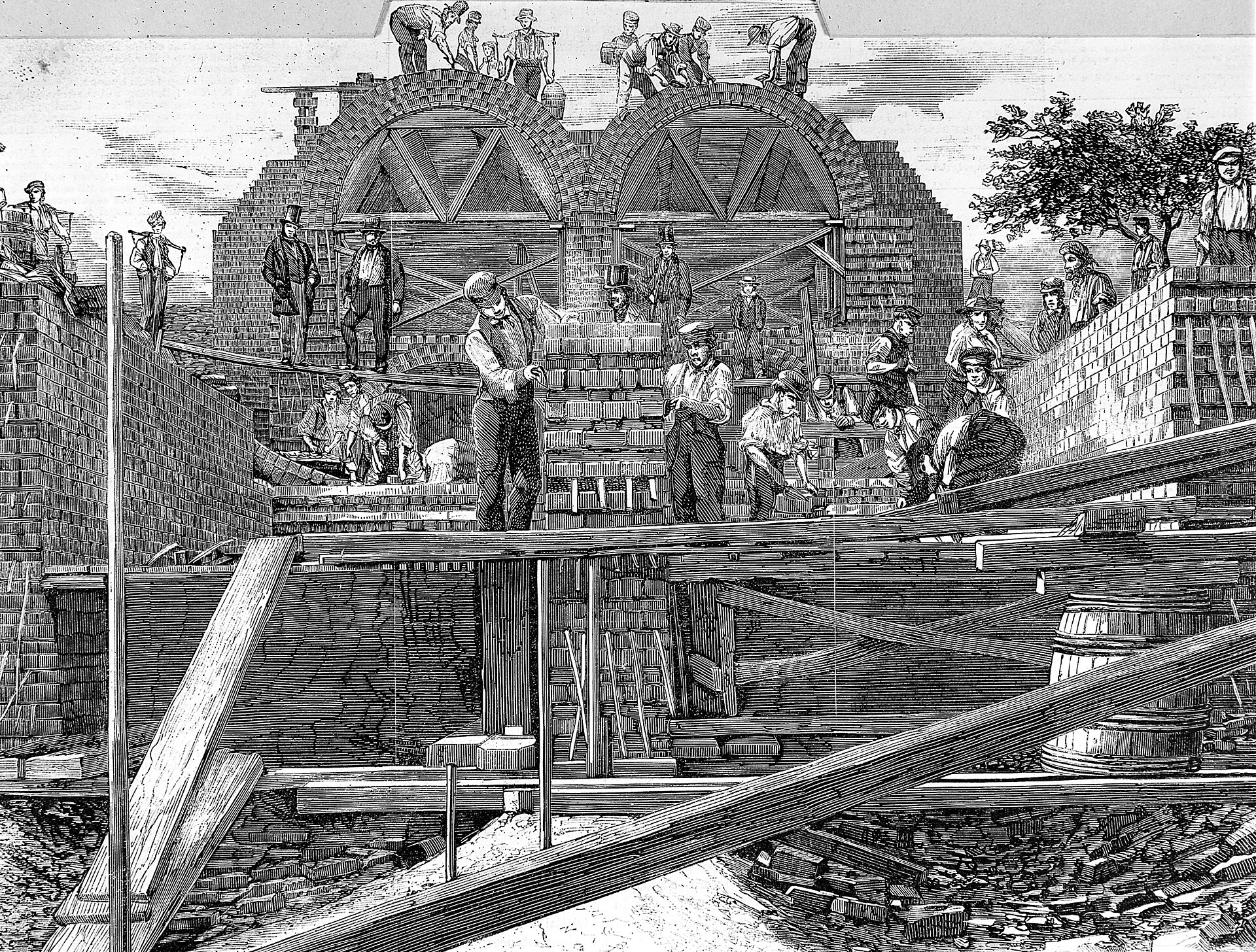

The improvements to public health were substantial.
Although removing sewage was partly motivated by the desire to eliminate dangerous smells, the system also reduced the contamination of water supplies. In doing so, it helped address a major route through which cholera actually spread.
London’s final major cholera outbreak in 1866 was concentrated in parts of East London where contaminated water remained a serious problem. The outbreak provided further evidence supporting Snow’s explanation.
There is something remarkable about this sequence of events.
The sewer system improved public health even while the cause of cholera was still being debated.
Snow’s research demonstrated the importance of following the evidence, while Bazalgette’s work showed that practical improvements could still be made before the scientific explanation was widely accepted.
Still, the system contained an important limitation.
It did not eliminate London’s sewage. It transported it.
The Problem Moves Downstream
Bazalgette’s system carried waste through intercepting sewers toward outfalls farther east along the tidal Thames. The intention was that the outgoing tide would help carry the sewage away from London and toward the sea.
From the perspective of central London, this was an extraordinary improvement.
Sewage that had accumulated in heavily populated areas could now be carried away through underground infrastructure. The river in the heart of the city was relieved of much of the waste entering it directly.
But moving sewage and treating sewage are two different things.
The new system initially discharged largely untreated waste into the lower Thames. Communities farther downstream still had to contend with pollution, and complaints followed. Historic England documents both the system’s benefits and the downstream complaints.
What surprised me most was discovering that this concern was not entirely overlooked by the people making the decisions.
During a parliamentary debate on July 15, 1858, General Codrington raised concerns about communities such as Woolwich, Deptford, and Greenwich. He argued that although London naturally wanted to dispose of its sewage, there was also “an important minority to be considered” among those living farther downriver.
A week later, members of Parliament continued debating the locations of sewage outlets, possible treatment methods, and safeguards for nearby communities.
In other words, the potential consequences were being discussed before the project was completed.
That makes the decision more complicated.
It would be easy to look back and assume that the authorities simply failed to consider what would happen downstream. The parliamentary record suggests otherwise. Some people recognized the problem, even if the eventual solution did not fully resolve it.
I initially wondered whether this was a case of wealthier Londoners improving their own circumstances at the expense of poorer communities farther down the river. That possibility deserves investigation, but the evidence I have examined does not establish such a simple division.
What is clear is that the benefits and burdens of the project were not distributed equally.
Central London experienced a dramatic improvement in sanitation, while pollution remained a concern downstream.
It was not until the late 1880s that treatment improvements at Beckton and Crossness began separating solid waste from liquid effluent before discharge. Even then, the system was not eliminating waste entirely. The collected sludge was transported out to sea for disposal.
The solution had evolved, but only after the limitations of the original approach became increasingly apparent.
This raises a difficult question: Can we call something a success when it resolves an enormous problem for one group of people while leaving consequences for another?
A Successfully Incomplete Solution
After considering the history, I find myself describing Bazalgette’s sewer system as a successfully incomplete solution.
It was successful because it dramatically improved sanitation in London and helped protect public health.
It was incomplete because the city had not fully addressed what happened to the waste after it left the populated areas the system was designed to protect.
I don’t believe those two conclusions contradict one another.
If I had been responsible for approving the project in 1858, knowing what I know about the available options and the dangers facing London, I believe I would still have approved it.
The reason is relatively simple: doing nothing carried consequences of its own.
London had already experienced devastating cholera outbreaks. Its existing sanitation infrastructure was inadequate for its population, and continued inaction would have left those problems unresolved.
Waiting for a perfect solution could have meant allowing preventable suffering to continue while engineers and politicians debated what should be done.
That doesn’t mean every proposed solution would have been justified, or that the alternatives available in 1858 were limited to this project or nothing at all. Parliament debated different approaches, and those alternatives deserve consideration.
Nevertheless, I believe the immediate improvements offered by the sewer system justified moving forward, even if the project could not address every problem at once.
The benefits, in my judgment, outweighed the costs.
But approving the project would not have meant accepting its limitations as permanent.
There is an important difference between recognizing that a solution is incomplete and deciding that its remaining problems are no longer your responsibility.
Progress Creates Responsibility
If I had approved London’s sewer system knowing that it would create problems for communities downstream, I believe I would have had a responsibility to those communities afterward.
That responsibility would have included continued improvements to the system, monitoring its effects, and intervening where possible to reduce the consequences.
In fact, I think those commitments should have been part of the decision from the beginning.
An urgent solution might be necessary, but urgency should not eliminate accountability.
The people who benefit from a project are not always the same people who bear its costs. When that happens, declaring the project successful solely because it improved conditions for the majority seems insufficient.
At the same time, I don’t believe the existence of those costs automatically makes the project unjustifiable.
This is what makes the Great Stink such an interesting case.
There was no simple answer that would immediately eliminate London’s sanitation crisis without cost, disruption, or uncertainty. The authorities had to make decisions using the knowledge, resources, and technology available to them.
They had to act before every question had been answered.
And sometimes, that is what progress requires.
But progress should not become an excuse to stop asking questions once the most visible problem has disappeared.
The later improvements to London’s sewage treatment demonstrate that the original system was not the final answer. Its infrastructure could be expanded, its methods improved, and its consequences addressed as new knowledge and technology became available.
That is perhaps the most important lesson I take from this story.
A solution does not have to be perfect to be worth pursuing. But accepting an imperfect solution should also mean accepting the responsibility to improve it.
Bazalgette’s sewer system deserves recognition for what it accomplished. It transformed London and contributed to improvements in public health that benefited generations.
Yet its limitations are also part of its history.
To me, both sides of that story are worth remembering.
Perhaps the true measure of progress is not whether we manage to solve every problem at once, but whether we remain willing to confront the problems our solutions leave behind.